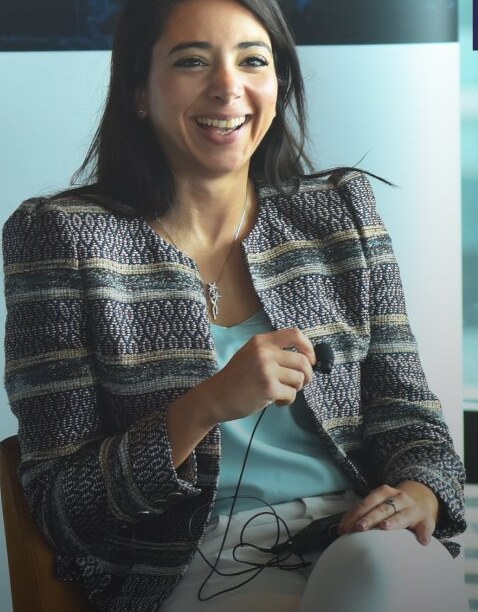
The Jordanian Engineer Who Built MENA's Compliance Layer Before Anyone Asked For It
Ola Doudin launched BitOasis from Dubai in 2015 when no Gulf regulator had a framework for digital assets, and spent a decade building the compliance infrastructure anyway.
The transaction cost almost nothing and required no bank. Ola Doudin sent money through PayPal to a contact in Canada in 2013 and received bitcoin in return: no correspondent bank, no currency desk, no fee consuming a percentage of the principal. She had spent years in IT risk advisory for financial institutions at Ernst & Young in London before leaving in the aftermath of the 2008 financial crisis. She was in Amman. The difference between the cost of moving money the way she had just moved it and what the banking system charged for an equivalent transfer was not marginal. It was structural. The region around her had some of the largest remittance corridors in the world and no platform designed to move money this way.
The Engineer Who Stopped Auditing and Started Building
Ola Doudin grew up in Amman, Jordan, and left for the United Kingdom to study at the University of Birmingham, where she completed a degree in electronic engineering. After graduating, she joined Ernst & Young in London, working in IT risk and advisory for financial institutions. The role placed her inside the architecture of global banking, not as a customer but as someone whose job was to examine the systems that held institutions together.
When the 2008 financial crisis arrived, the limits of that architecture became impossible to dismiss from where she was sitting. Doudin left London and returned to the Middle East. By 2013, she had found Bitcoin and made her first purchase, wiring money through PayPal to a contact in Canada who deposited bitcoin directly into her digital wallet. She joined informal Bitcoin meetup groups in Amman and Dubai. At one of those gatherings in Dubai, she met Daniel Robenek, a Czech software engineer. Together, they began to define a product.
What they identified was a structural absence. MENA had some of the world's largest remittance corridors and a significant unbanked adult population. The formal banking system charged substantial fees on cross-border transfers. Bitcoin transfer fees ran to a fraction of those costs. But there was no platform designed for MENA users, no customer support built for local payment methods, no legal structure that acknowledged digital assets as a legitimate financial category. In 2015, Doudin and Robenek launched BitOasis from Dubai to fill that gap.
Building the Licensed Exchange Before the Licence Existed
The obvious move in 2015 was to build fast and handle compliance later. Most operators who entered the nascent crypto space in the Gulf followed that logic: consumer-facing products, minimal legal infrastructure, operations structured to avoid regulatory attention. Doudin took a different configuration from the start.
BitOasis would be built as if it were already licensed, even though there was no licence to apply for. Dubai would not have a dedicated virtual assets regulator until 2022. But Doudin calculated that digital assets in the Gulf would eventually be subject to formal regulatory oversight, that the region's governments would require it, and that the platform which had already built its compliance infrastructure before those rules were written would occupy a fundamentally different position from the ones that had not.
The costs of that conviction were real in the short term. Establishing banking relationships for a crypto business in those years was genuinely difficult; banks across the region declined to serve digital asset companies. KYC and anti-money-laundering processes were expensive to implement voluntarily when no authority required them. Competitors who skipped that investment moved faster and operated at lower cost. BitOasis secured seed funding led by Wamda Capital and pressed forward.
The wager was specific: that when a Gulf regulator finally formalized the rules, the exchange that had been building toward them for years would be the only one already meeting them.
This was not a comfortable position to hold for years on end. Every quarter that a competitor operated without the compliance overhead and served more users and raised more money was another argument against the thesis. Doudin kept building the infrastructure anyway.
Every Regulatory Milestone as Institutional Capital
BitOasis raised thirty million dollars in a Series B round in October 2021, co-led by Wamda Capital and US-based Jump Capital, with participation from Pantera Capital, Digital Currency Group, Alameda Research, Global Founders Capital, and NXMH. By March 2022, the platform had processed more than four billion dollars in cryptocurrency trades. The round was evidence of a business that had remained operational through several cycles of speculative excess and contraction in the crypto markets without abandoning the compliance-first posture that had made its early years more expensive than they needed to be.
When the Dubai government established the Virtual Assets Regulatory Authority in March 2022, creating the world's first dedicated virtual assets regulator, BitOasis was among the first platforms to apply for a provisional operating permit. In May 2023, it became the first broker-dealer in the region to receive an MVP Operational Licence from VARA: a formal acknowledgment that the compliance infrastructure BitOasis had built over nearly a decade met the standards the new regulator had decided to enforce.
The path was not uninterrupted. In July 2023, VARA suspended the MVP Operational Licence, citing BitOasis's failure to meet specific conditions within a thirty to sixty-day window. BitOasis worked through those requirements, and the suspension was lifted in April 2024. Three months later, in July 2024, India's CoinDCX, one of Asia's largest crypto exchanges, acquired BitOasis. Doudin remained as CEO and the brand and leadership team were unchanged: the capital and geographic reach of CoinDCX backing the compliance infrastructure Doudin had been constructing since 2015.
In December 2024, VARA granted BitOasis its full Virtual Asset Service Provider licence, the final stage in the authority's licensing process. The arc from 2015, when Doudin launched a crypto exchange with no regulator to register with, to December 2024, when that exchange received the most comprehensive regulatory endorsement Dubai's virtual assets framework could issue, took nearly a decade. Each milestone along the way converted time and operational discipline into institutional credibility that could not be replicated by competitors who had spent those same years without the compliance infrastructure that was now mandatory.
The Compliance Layer as the Founding Moat
The lesson BitOasis offers is precise. It does not argue for slow movement or unnecessary caution. It argues that in markets where a regulatory framework is absent but inevitable, the operator who builds toward that framework before it exists is the only one whose institutional position survives its arrival intact.
Every exchange that skipped the compliance investment in 2014 or 2016 or 2019 was building a business whose continued operation depended on regulators deciding not to look closely. When VARA looked closely, those platforms faced a reckoning that BitOasis had resolved a decade earlier by building the infrastructure before anyone required it.
Doudin described receiving the full VASP licence as "a very significant moment for BitOasis and the broader virtual assets community in the region," and said it was "a testament to our team's dedication to regulatory compliance" and a reflection of the company's "resolve to lead the industry with integrity and accountability." The language is measured. It is consistent with a founder who treated regulatory engagement not as a cost of doing business but as the work itself.
In digital finance, the compliance layer is not a constraint on growth. It is the surface on which institutional trust accumulates. In a market where that trust is the scarcest resource, the operator who accumulates it first, through years of voluntary compliance before compliance is required, converts patience into a structural position that a faster competitor arriving later cannot purchase. Regulators do not issue full licences to the platform that moved quickest. They issue them to the one that has been building toward them the longest.
Compliance is the least glamorous moat in fintech and the only one regulators hand out personally. Doudin built KYC infrastructure in 2015 for rules that did not arrive until 2022, carried the cost while faster competitors banked the savings, and ended up the first broker-dealer VARA ever licensed. The decade was the product. The Compounding Move section shows what each milestone converted into.