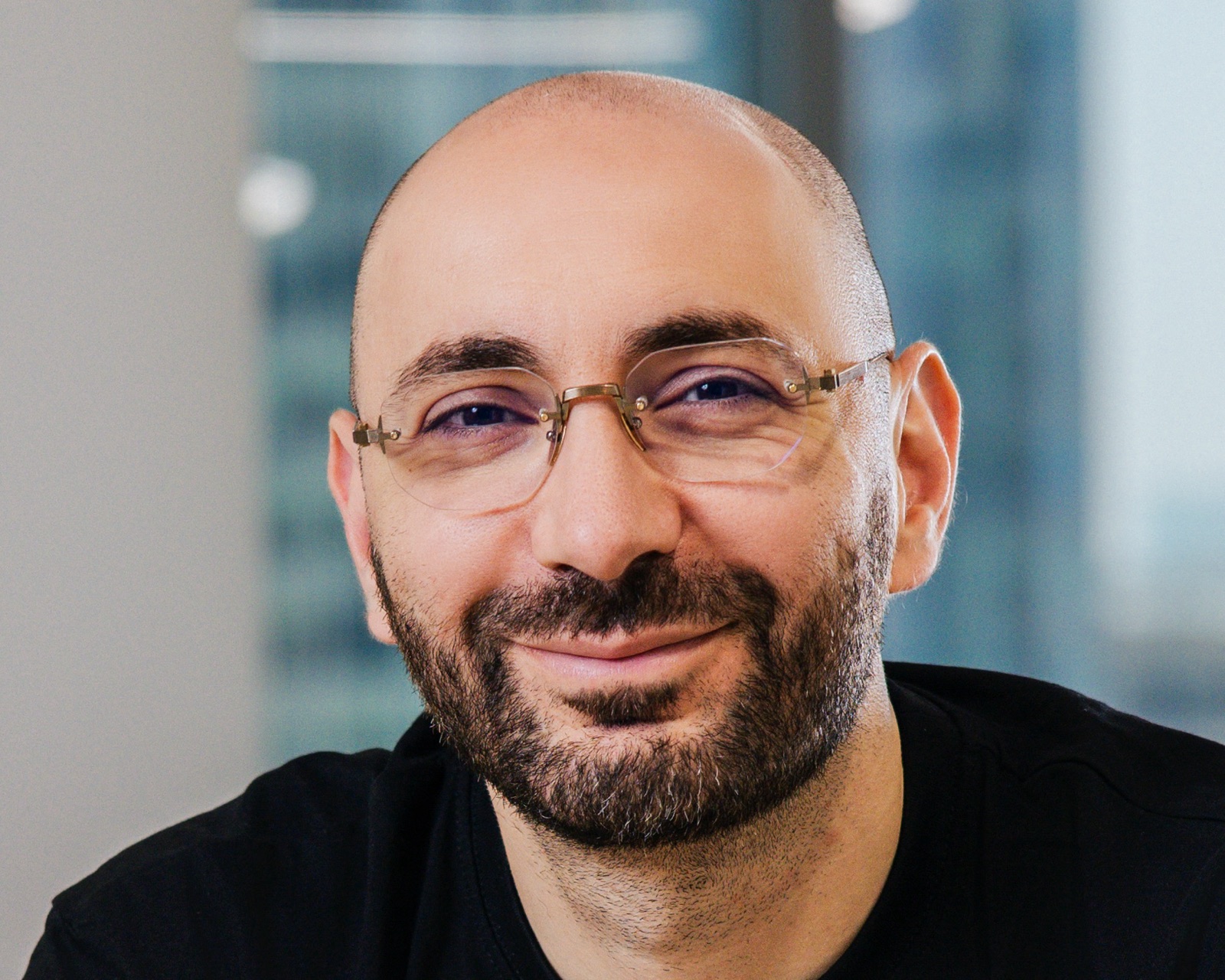
In the years Hosam Arab spent building Namshi, the region's online fashion orders arrived at doorsteps in a particular way. A courier would ring. A customer would answer. Then, in a portion of those encounters that no amount of product investment seemed to reduce, the order would come back. Cash on delivery was the default payment method across MENA's digital commerce market, and it asked both sides of a transaction to commit to each other at the worst possible moment: when the parcel was already at the door. Arab was inside Namshi for its whole first era. He watched the digital commerce market grow while the digital payment market did not. When Emaar Malls completed its full acquisition in 2019 and he stepped down as CEO, he had not solved the problem. He had only documented it.
The Fashion Platform That Built a Fintech Founder
Namshi launched in 2011 as one of the early bets on digital fashion retail in the Gulf, at a time when most serious operators considered e-commerce in the region a category not yet ready to scale. Arab co-founded it alongside several partners and was its chief executive when Emaar Malls completed the buyout. What the platform built over those years was not just a catalogue and a logistics operation. It was a detailed education in how MENA's consumer behaved at checkout.
The picture that education produced was specific. Consumers across the region had disposable income, growing access to smartphones, and a demonstrated willingness to shop online. What they did not do, in sufficient numbers, was pay before the goods arrived. Cash on delivery was the method the market had converged on, and it asked the buyer to commit only once the parcel was at the door. It was workable until that moment came. Returns were high. The costs of running COD operations fall on the merchant, and for years the merchant was Namshi.
By 2019, Emaar Malls, which had been acquiring stakes in Namshi since 2017, completed a full buyout of the platform. Arab stepped down as CEO. He left with no resolution to the payment problem. The problem, and the cost of carrying it, had been his to manage for years. On this record's reading, that is the founding asset he took to his next company.
The Replacement for Something That Never Worked
In 2019, Arab co-founded Tabby in Dubai with Daniil Barkalov. The founding thesis was direct. Buy now pay later had demonstrated in European and Australian markets that consumers would adopt deferred payment when the barrier to entry was low: no credit card required, no pre-registration, no interest. What differed in MENA was not the consumer psychology but the baseline against which the alternative was measured. In Europe, BNPL competed with credit cards. In the Gulf, it competed with cash.
That distinction shaped the merchant sale. On this record's reading, what Arab took to retailers was not a convenience product but the financial arithmetic of cash on delivery: the return rates, the fulfillment costs, the fraud exposure, the capital tied up in parcels that came back. He had lived that arithmetic for years. The argument was not that Tabby was easier to use. It was that it solved a problem the merchant was already paying to manage.
Arab positioned Tabby not as a new financial instrument competing with an established system, but as a replacement for something that had never been more than a necessary workaround.
Tabby announced $2 million in seed funding in November 2019, a round Global Founders Capital led and Wamda Capital and Arbor Ventures joined, and went live in early 2020. Wamda, the publication beside it, described the product as a "cash on delivery alternative." The framing came from an investor rather than a disinterested party, but it was also the framing Arab had chosen. Arab had positioned Tabby not as a new financial instrument competing with an established system, but as a replacement for something that had never been more than a necessary workaround. The merchant who had been inside Namshi for years could sit across from another merchant and speak the language of COD returns.
The Same Thesis, Pursued at Increasing Scale
The pattern that emerged over the following years was not a pivot. It was the same founding thesis pursued at larger scale, each funding round arriving as evidence that the thesis was correct.
In August 2021, Tabby raised a $50 million Series B at a $300 million valuation. In March 2022, Sequoia Capital India and STV led a $54 million extension of that round. In January 2023, a $58 million Series C valued the company at $660 million, with PayPal Ventures making its first investment in the GCC.
In October 2023, Wellington Management led a $200 million Series D at a $1.5 billion valuation. TechCrunch described the round as making Tabby the Gulf's first fintech startup unicorn. The word doing the work there is startup. Saudi Arabia's STC Pay had reached a $1.33 billion valuation just under three years earlier, but as a telecom subsidiary rather than an independent company. Outside the Gulf the milestone was not new either, Egypt's MNT-Halan having crossed $1 billion independently nine months before, on a $400 million round.
In September 2024, Arab announced Tabby's acquisition of Tweeq, a Saudi-based digital wallet licensed by the Saudi Central Bank. The deal was announced at the 24 Fintech conference in Riyadh, subject to regulatory approval. The acquisition was not a BNPL extension. It was a statement that Tabby was building toward a broader financial services layer: spending accounts, debit cards, and money management tools accessible to the consumer base the platform had accumulated.
In February 2025, Blue Pool Capital and Hassana Investment Company led a $160 million Series E at a $3.3 billion valuation. At that point Tabby reported more than 15 million registered users, over 40,000 sellers, and more than $10 billion in annualized transaction volume. In October 2025, a secondary share sale set an implied valuation of $4.5 billion, with new investors acquiring stakes from existing shareholders without the company raising new primary capital. The secondary price was the market's read on what the business was worth ahead of a public listing. Tabby is now headquartered in Riyadh, and in May 2025 Arab told CNBC the company was targeting an IPO within 12 to 18 months. That window has largely run without a listing.
The Advantage of Knowing Where the Transaction Broke
What follows is this record's reading rather than reported fact. The distinction that matters is not what Arab knew about finance but where he learned what breaks. At Namshi, he spent years watching a problem from the side that bore its cost. He understood return rates, fulfillment economics, and the trust calculus of the regional consumer before he designed a financial instrument to address it. That knowledge is not something a product team can acquire quickly. It was earned through years of operations.
What separates Arab is where he had stood while a payment method failed. He had absorbed the cost of it himself. That is why the company was built to be sold to merchants first, with consumers arriving through them.
The BNPL category itself is not a durable position: it can be entered by well-funded competitors, and the space in MENA is now contested. The asset that looks harder to copy is the merchant network, assembled by offering retailers a replacement for COD that removed a known cost from a known operation. What made that argument land is that Arab could quantify what a merchant was already paying for the alternative.
The next founder looking at a regional market with an entrenched, imperfect payment behavior should read this detail: Arab did not build Tabby because he saw a market opportunity. He built it because he had spent years paying the price of the problem he was about to solve. Those years were not preamble. They were the product.
Dubai of Tomorrow is the living record of the founders building MENA from Dubai. Cards enter the record as they are ready, watched by machines, checked against sources, anchored to Bitcoin, and kept by a name. Their stories live on their profiles when they are ready. I build in the same market I document, and I disclose it.